Ages 3-5 · 3 stories
Friendship bedtime stories for preschoolers
Friendship is the subject children think about most and describe least. These stories give them the words: joining in, being left out, apologizing properly. Preschool is the stretch where a child stops just listening and starts predicting what happens next. These stories are sized for that: three to five minutes, one problem, and an ending your child can see coming a page early and feel clever about.
Stories to read now
Ages 4-7 · 5 minutes
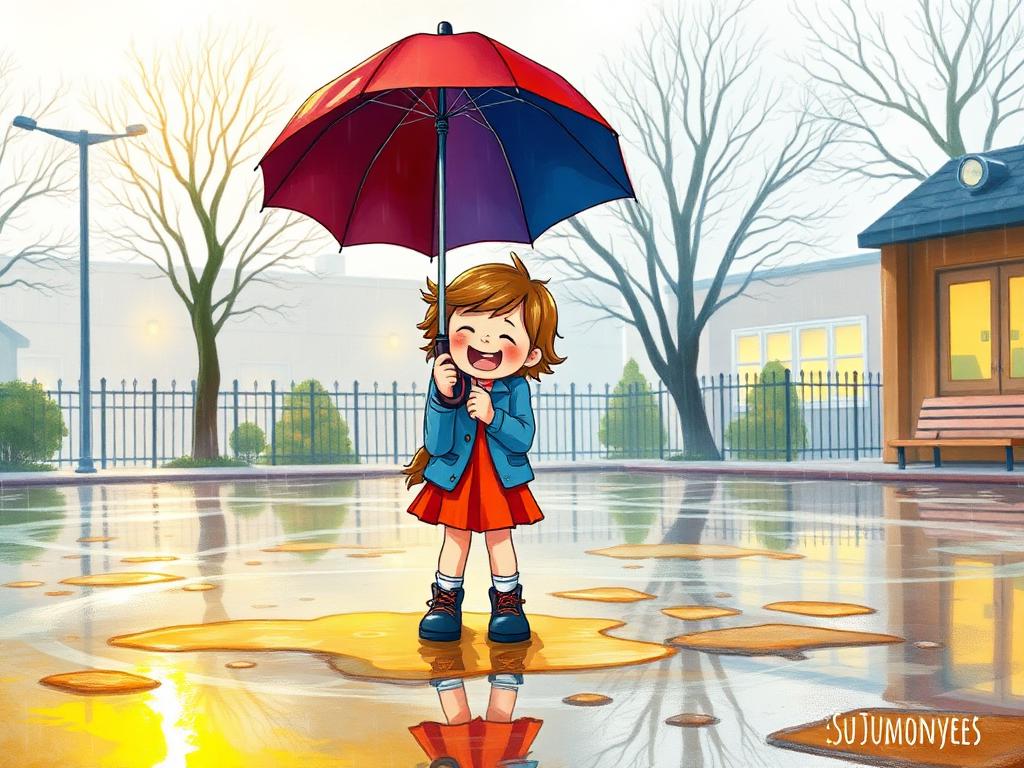
Two People, One Umbrella
The umbrella is small. The walk is long. The rain does not care.
Ages 4-7 · 5 minutes
The Swing With Two Names
Two children. One swing. Twenty minutes of break left.
Ages 5-9 · 6 minutes
The Apology That Took Three Tries
"Sorry you're upset" is not an apology, and both of them know it.
How to get the most from these
Name the repair, not the rupture
Most friendship stories dwell on the falling-out. The useful part is the repair — what the character actually said. Point at that line and your child will borrow it.
What works in the preschool years
Between three and five, ask one question per story and no more — "what do you think they will do?" right before the turn. It keeps your child predicting instead of drifting, and it is the same skill they will use for reading comprehension in kindergarten. Save the rest of the conversation for the morning.
Friendship stories at three
Three-year-olds play alongside each other rather than together, so friendship stories at this age work best as sharing stories: one toy, two characters, a solved page.
Friendship stories at four
At four the falling-out arrives. Read the apology line twice — that exact sentence is the thing your child will borrow, and it is usually only six words long.
Friendship stories at five
Five is the age of the best friend and the sudden exclusion. Ask what the left-out character could have said, and you have rehearsed tomorrow's playground without mentioning it.
Make a friendship bedtime stories for preschoolers with your child in it
Type a first name and Imagiverse writes, illustrates and narrates a brand-new story around them in about a minute. Free to try, no card needed.
Frequently asked questions
Can a story help with a real friendship problem?
It gives a rehearsed script, which is most of what a child is missing in the moment. Read it near the problem, not in the middle of it.
What makes a good bedtime story for preschoolers?
A single problem, a familiar shape, and a quiet last page. Preschoolers do best when the biggest moment sits in the middle of the story rather than at the very end, so the reading itself winds them down.
My preschooler keeps being left out — which story helps?
One where the repair is shown, not just the rupture. Read it on a calm evening rather than the night it happened, so it lands as a script to borrow instead of a lecture about their day.