Ages 3-5 · 3 stories
Dragon bedtime stories for preschoolers
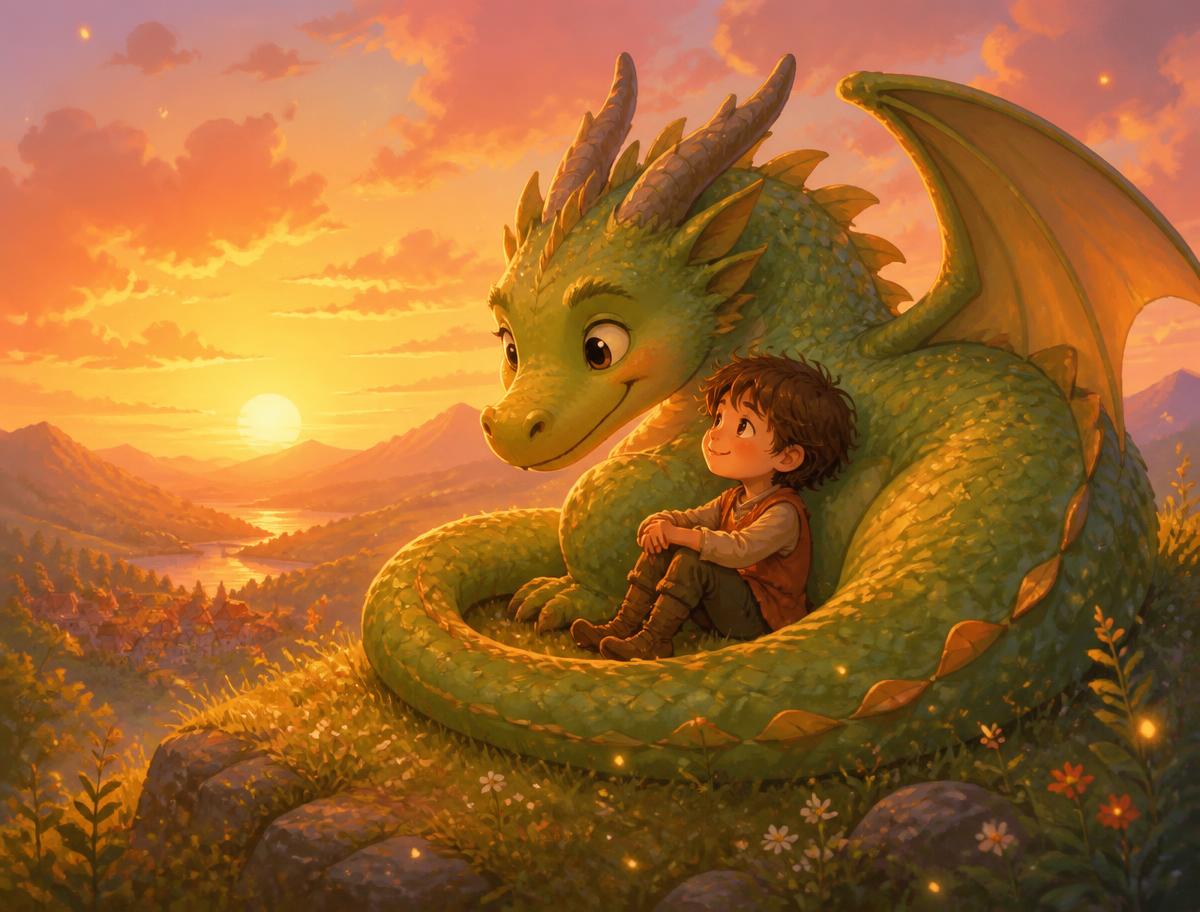
Dragons are the safest way for a child to practice being brave, because a dragon is enormous and frightening right up until the moment it turns out to be worried about something too. Preschool is the stretch where a child stops just listening and starts predicting what happens next. These stories are sized for that: three to five minutes, one problem, and an ending your child can see coming a page early and feel clever about.
Stories to read now
Ages 3-6 · 4 minutes
A Dragon in the Recycling
Something is eating the cardboard, and it is not the neighbor's goat.
Ages 3-6 · 5 minutes
Teaching a Dragon to Whisper
A dragon has exactly one volume, and it is bedtime.
Ages 4-8 · 6 minutes
The Dragon Who Was Scared of Fire
Every dragon in the valley breathes fire. Ember breathes steam, and only when nobody is watching.
How to get the most from these
Why dragons work so well
A dragon is a feeling with wings. Children who cannot yet say they feel too big, too loud, or too much will happily talk about a dragon with exactly that problem.
What works in the preschool years
Between three and five, ask one question per story and no more — "what do you think they will do?" right before the turn. It keeps your child predicting instead of drifting, and it is the same skill they will use for reading comprehension in kindergarten. Save the rest of the conversation for the morning.
Dragon stories at three
A three-year-old does not want the dragon defeated, they want it fed. Read the dragon's roar as a repeated line they can join in with, then drop your voice for the page where it turns out the dragon is only hungry.
Dragon stories at four
By four the dragon can be genuinely in the way — blocking a bridge, sitting on the last apple. One obstacle, one solution, and your child will tell you the solution before you finish the page.
Dragon stories at five
Five-year-olds start negotiating with the dragon. That is the age to pause before the meeting and ask what they would say to something that big, because the answer is usually the story's actual moral in their own words.
Make a dragon bedtime stories for preschoolers with your child in it
Type a first name and Imagiverse writes, illustrates and narrates a brand-new story around them in about a minute. Free to try, no card needed.
Frequently asked questions
Are dragon stories too scary for young children?
Not when the dragon has a problem of its own. Every dragon story here gives the dragon a worry within the first page, which reframes it as a character rather than a threat.
What makes a good bedtime story for preschoolers?
A single problem, a familiar shape, and a quiet last page. Preschoolers do best when the biggest moment sits in the middle of the story rather than at the very end, so the reading itself winds them down.
Which dragon story should I start with for a 3-year-old?
Start with one where the dragon has a small, physical problem — a stuck wing, a lost egg — rather than a battle. At three the plot has to be something your child could point at in the picture.