Age 7 · 4 stories
Dragon stories for 7-year-olds
Dragons are the safest way for a child to practice being brave, because a dragon is enormous and frightening right up until the moment it turns out to be worried about something too. Seven-year-olds want a story that respects them: a character with a real flaw, a problem that is not solved by an adult, and an ending they had to work out.
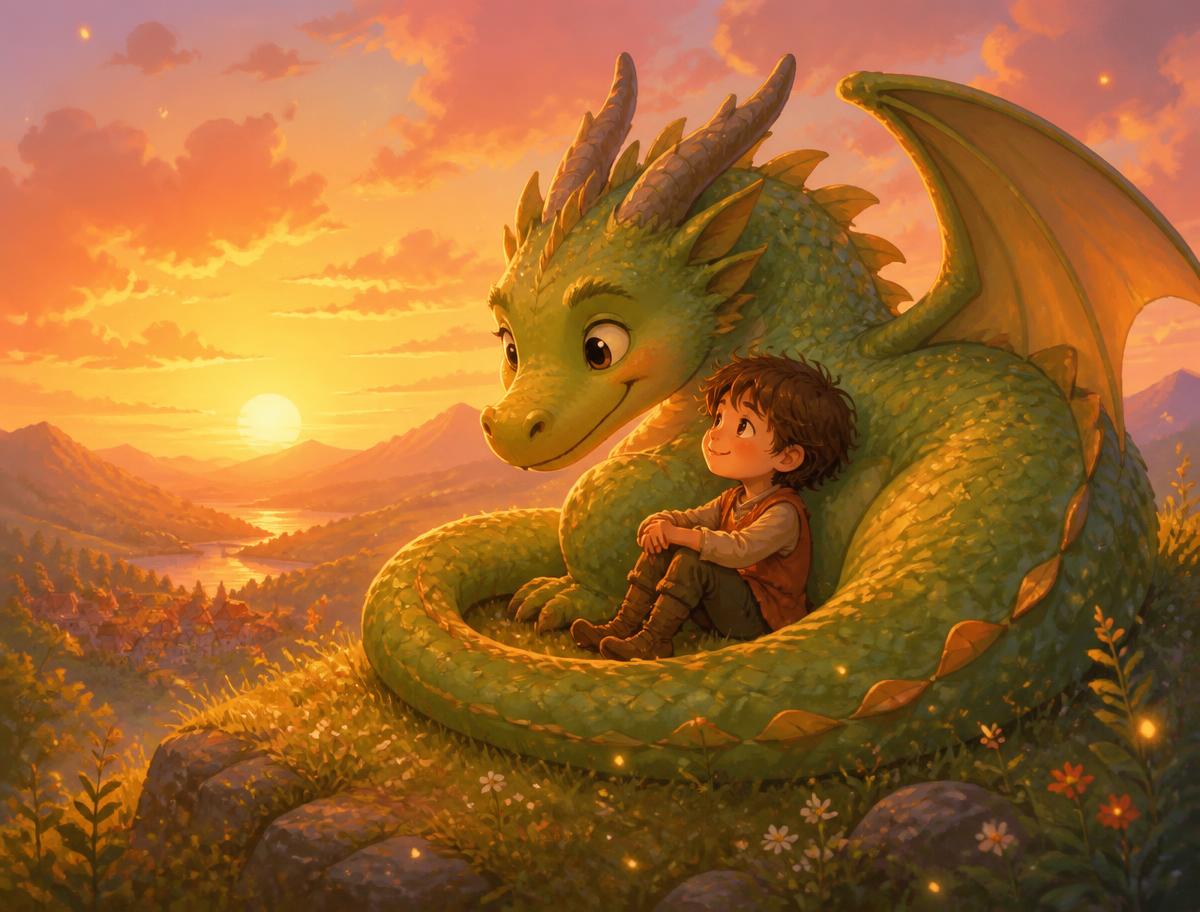
Stories to read now
Ages 4-8 · 6 minutes
The Dragon Who Was Scared of Fire
Every dragon in the valley breathes fire. Ember breathes steam, and only when nobody is watching.
Ages 3-6 · 4 minutes
A Dragon in the Recycling
Something is eating the cardboard, and it is not the neighbor's goat.
Ages 6-10 · 10 minutes
The Last Egg on Ember Ridge
The egg has to stay warm for eleven nights. There are only two of them to do it.
Ages 3-6 · 5 minutes
Teaching a Dragon to Whisper
A dragon has exactly one volume, and it is bedtime.
How to get the most from these
Why dragons work so well
A dragon is a feeling with wings. Children who cannot yet say they feel too big, too loud, or too much will happily talk about a dragon with exactly that problem.
What works at seven
By seven, children want the character to fix it themselves. Stories where a grown-up steps in and resolves everything land flat. Look for the moment the hero decides, and ask afterwards what they would have done.
Make a dragon stories for 7-year-olds with your child in it
Type a first name and Imagiverse writes, illustrates and narrates a brand-new story around them in about a minute. Free to try, no card needed.
Frequently asked questions
Are dragon stories too scary for young children?
Not when the dragon has a problem of its own. Every dragon story here gives the dragon a worry within the first page, which reframes it as a character rather than a threat.
How do I keep a 7-year-old reading?
Continuity. A hero who carries over from one story to the next — same name, same friends, same running joke — is the single most reliable way to turn reading into a habit at this age.