Age 7 · 4 stories
Dinosaur stories for 7-year-olds
Dinosaurs are the first subject many children become genuinely expert in, and a story that takes that expertise seriously earns instant attention. Seven-year-olds want a story that respects them: a character with a real flaw, a problem that is not solved by an adult, and an ending they had to work out.
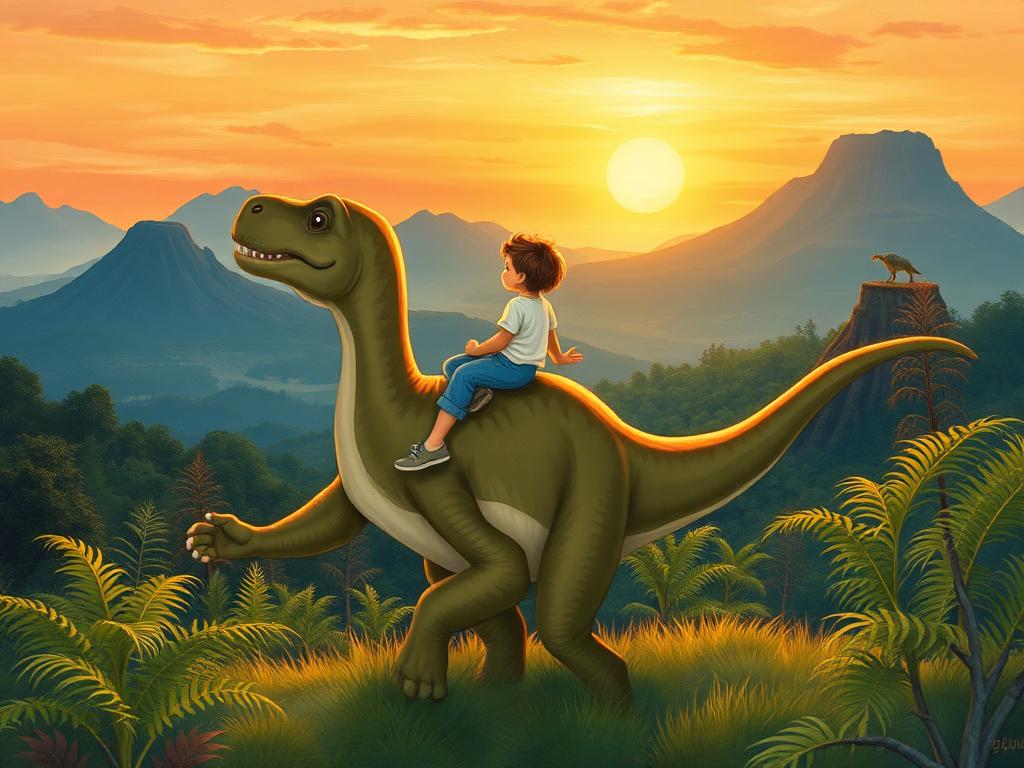
Stories to read now
Ages 3-7 · 5 minutes
The Smallest Dinosaur in the Valley
Everyone in the herd is enormous. Compsognathus is not.
Ages 5-9 · 7 minutes
Fossil Hunting With Grandpa
Six hours on a cold beach for one small piece of a very old animal.
Ages 4-7 · 5 minutes
The T. Rex With Tiny Worries
The biggest dinosaur in the forest is worried about absolutely everything.
Ages 6-10 · 9 minutes
Footprints That Go Both Ways
The tracks in the riverbed go out. Nothing came back.
How to get the most from these
Use the expertise
A dinosaur-obsessed child will correct you, loudly, and that is the whole point. Let them name the species, ask what it ate, and you have converted a bedtime story into ten minutes of talking.
What works at seven
By seven, children want the character to fix it themselves. Stories where a grown-up steps in and resolves everything land flat. Look for the moment the hero decides, and ask afterwards what they would have done.
Make a dinosaur stories for 7-year-olds with your child in it
Type a first name and Imagiverse writes, illustrates and narrates a brand-new story around them in about a minute. Free to try, no card needed.
Frequently asked questions
Do dinosaur stories need to be scientifically accurate?
The details should not be wrong on purpose, but a worried T. rex is fiction and children know it. Accuracy matters most in the facts they will repeat at school.
How do I keep a 7-year-old reading?
Continuity. A hero who carries over from one story to the next — same name, same friends, same running joke — is the single most reliable way to turn reading into a habit at this age.