Ages 4-8 · dinosaur stories
Dinosaur stories starring your child
If your child can name eleven dinosaurs and you can name two, this is the page. Put them in the valley with the herd and watch how fast bedtime gets easier.
Stories to read now
Ages 3-7 · 5 minutes
The Smallest Dinosaur in the Valley
Everyone in the herd is enormous. Compsognathus is not.
Ages 5-9 · 7 minutes
Fossil Hunting With Grandpa
Six hours on a cold beach for one small piece of a very old animal.
Ages 3-6 · 5 minutes
The Dinosaur Who Was Afraid of Thunder
The loudest animal on earth is terrified of a loud noise.
Ages 4-7 · 5 minutes
The T. Rex With Tiny Worries
The biggest dinosaur in the forest is worried about absolutely everything.
Ages 3-6 · 4 minutes
A Triceratops Learns to Share
There is one fern patch and two very hungry dinosaurs.
Ages 6-10 · 9 minutes
Footprints That Go Both Ways
The tracks in the riverbed go out. Nothing came back.
How to get the most from these
What your child does in a dinosaur story
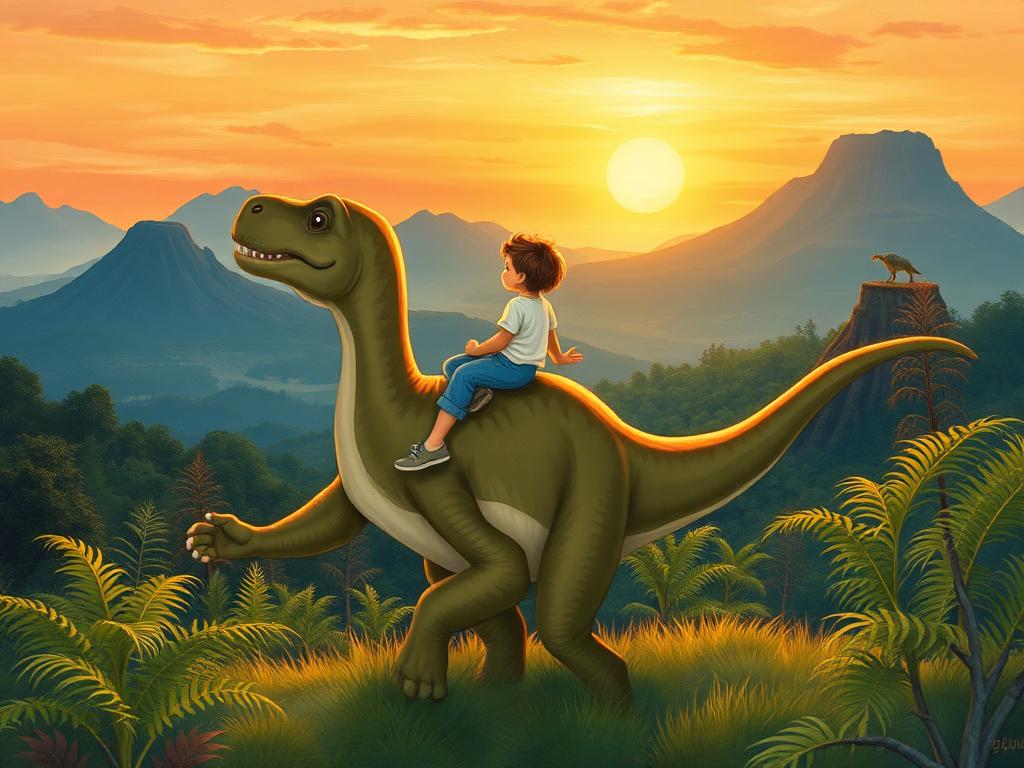
They are not a visitor watching from a jeep. Your child is the one who notices the nest is cold, who works out which footprints belong to whom, and who decides whether to tell the herd. The dinosaurs have the size; your child has the idea.
Why dinosaurs hold a 4-8-year-old
Dinosaurs are usually the first subject a child becomes a genuine expert in, and expertise is motivating. A story that uses the real names — and lets your child correct you when the story gets close to the edge of what they know — turns ten quiet minutes into ten minutes of talking.
Titles parents made this week
Maya and the Last Egg on Ember Ridge. Leo and the Smallest Dinosaur in the Valley. Ava and the Footprints That Went the Wrong Way. Your child's name goes where those names are, and the plot is written around it rather than pasted over it.
Put your child in a dinosaur story tonight
Type a first name. Imagiverse writes, illustrates and narrates a brand-new story starring them in about a minute — free preview, no card needed.
Frequently asked questions
Do the dinosaur facts stay accurate?
The names, diets and habitats stay right, because those are the details your child will repeat at school. The feelings — a nervous T. rex, a stubborn stegosaurus — are fiction, and children know the difference perfectly well.
My child only likes one dinosaur. Can the story use it?
Yes. Save the favorite species to their profile and it shows up as a character rather than background, story after story.