Age 4 · 3 stories
Animal stories for 4-year-olds
Animal characters let a child watch a difficult feeling from one step back, which is often the only distance that makes it discussable. At four, a story has to move. These are the shorter ones, with a single problem, a small cast, and a picture worth stopping on every page or two.
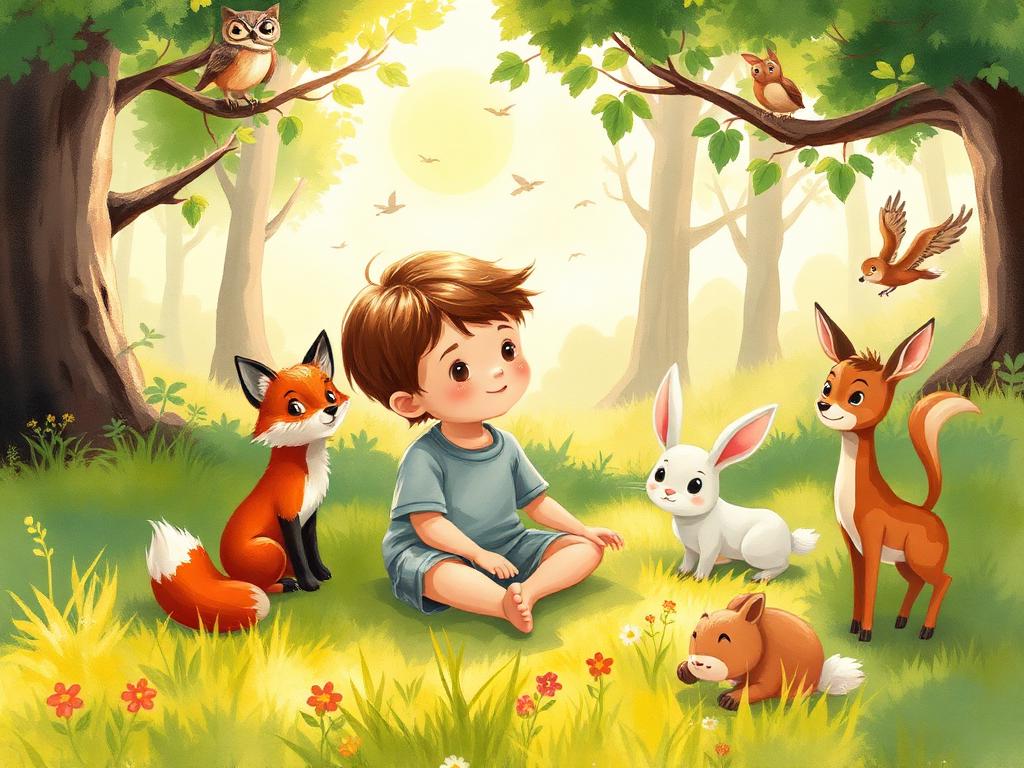
Stories to read now
Ages 3-6 · 5 minutes
The Fox Who Forgot How to Be Quiet
A fox is supposed to be silent. This one squeaks.
Ages 4-7 · 6 minutes
Eleven Ducklings and a Crossing
Eleven ducklings, one busy road, and a town that stops.
Ages 4-8 · 6 minutes
The Cat Who Only Visited Tuesdays
The cat comes every Tuesday, and only Tuesday, and nobody knows why.
How to get the most from these
One step removed
A child who will not talk about being left out at school will talk at length about a fox who was left out. Keep the conversation in the story and you will hear more.
What works at four
Four-year-olds follow one thread at a time. Pick stories with a single problem and a visible solution, and expect to be interrupted — answering the question and then rereading the line is better than pushing on.
Make a animal stories for 4-year-olds with your child in it
Type a first name and Imagiverse writes, illustrates and narrates a brand-new story around them in about a minute. Free to try, no card needed.
Frequently asked questions
Why do animal characters work better than children?
Distance. The feeling is identical but it belongs to somebody else, so a child can examine it without having to admit it is theirs.
How long should a story be for a 4-year-old?
Three to five minutes read aloud. If your child is still asking questions at the end, that is a sign the length was right, not that you should add another story.