Age 6 · 4 stories
Unicorn stories for 6-year-olds
Unicorn stories get dismissed as sparkle and nothing else, which is a shame — the good ones are almost always about being different in a group that expects sameness. Six-year-olds can hold a story with a proper middle, where things get worse before they get better. These are longer, and the characters make mistakes that matter.
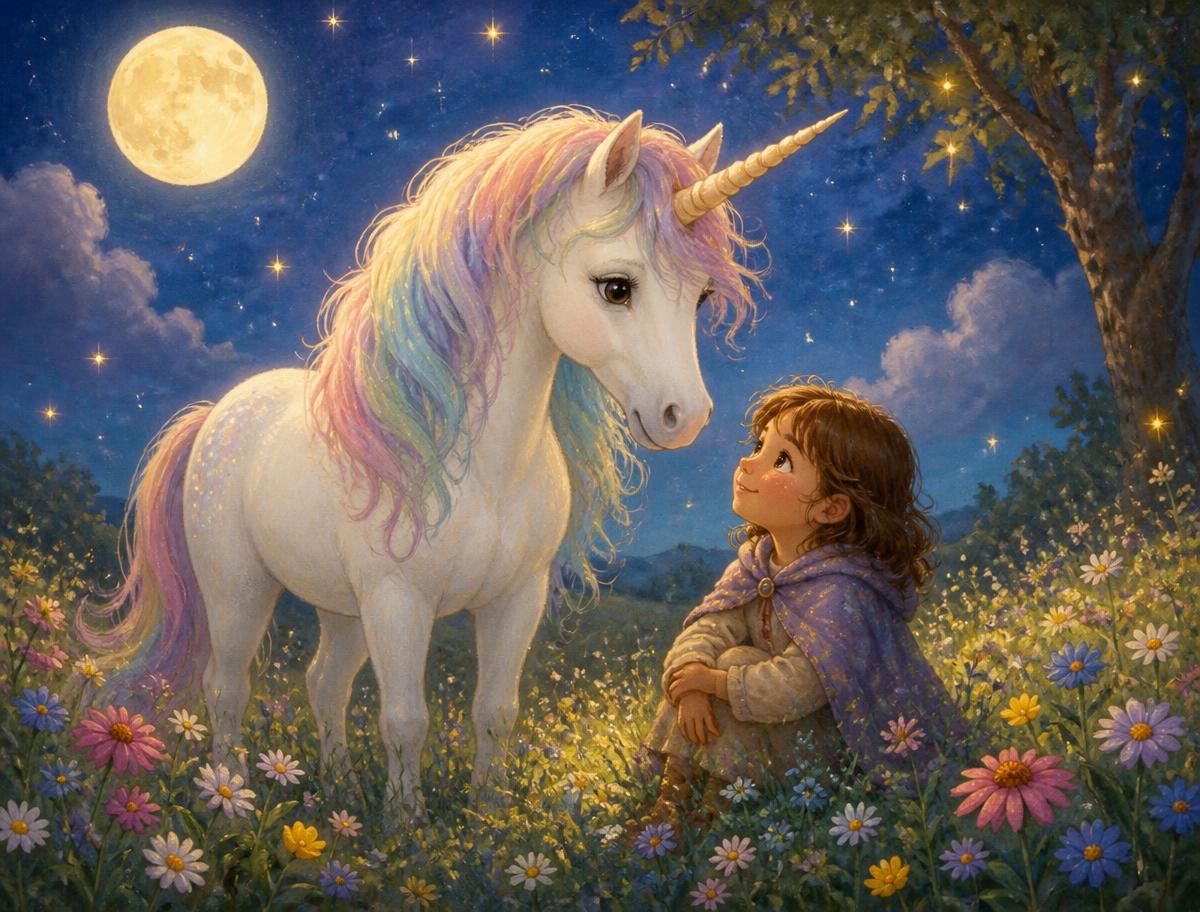
Stories to read now
Ages 4-8 · 6 minutes
The Unicorn With a Crooked Horn
Every horn in the herd points straight up. Hers points slightly left.
Ages 3-6 · 4 minutes
The Unicorn Who Could Not Sparkle
Everyone's magic arrives on their fourth birthday. Juno's is running late.
Ages 5-9 · 7 minutes
The Unicorn and the Borrowed Rainbow
She only borrowed it for one afternoon. It is now Thursday.
Ages 4-8 · 6 minutes
The Unicorn Who Stayed for the Rain
Unicorns always leave before the rain. This one didn't.
How to get the most from these
Look past the glitter
The unicorn stories worth rereading are the ones where the unicorn is imperfect: a crooked horn, a sparkle that will not come. That is the story your child is actually listening to.
What works at six
Six-year-olds notice unfairness sharply and will argue with a character's choice. Let them. A story a child disagrees with is remembered far longer than one they simply enjoyed.
Make a unicorn stories for 6-year-olds with your child in it
Type a first name and Imagiverse writes, illustrates and narrates a brand-new story around them in about a minute. Free to try, no card needed.
Frequently asked questions
Are unicorn stories only for girls?
No, and framing them that way narrows a child's reading early. These are stories about not fitting a group's expectations, which is universal.
Is my 6-year-old too old to be read to?
No. Children understand stories well above their own reading level until around age thirteen, so reading aloud keeps feeding vocabulary long after they can read alone.